Maicon looks like an English name, but it's a Brazilian creation derived from Michael. Learn why the
Maicon is not an English name in any conventional sense. It looks like one—two syllables, six letters, vaguely familiar to anyone who has flipped through a Premier League roster. But trace it back, and you land in Brazil, where Maicon exploded as a given name in the 1980s, largely thanks to the American actor Michael Douglas. Brazilian parents heard "Michael" and reshaped it into something that felt local。punchy, and slightly rebellious against the formal Portuguese Michael. So when a London clerk sees Maicon on a passport, the instinct to treat it as a misspelled English name is understandable but wrong.I first noticed this confusion while working with a youth football club in Manchester. A scout's spreadsheet listed a trialist as "Maicon (English name?)"—a question mark that made no sense to the player, a 19-year-old from São Paulo. He told me his name was just Maicon. No translation。
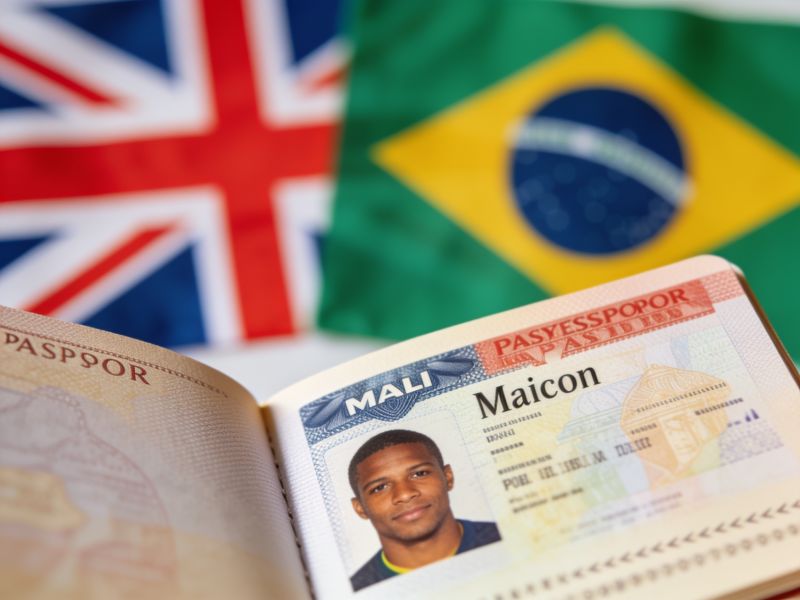
no English alias. The coach had assumed it was a typo for Michael. That kind of small friction happens constantly. In Brazil, Maicon is a standalone identity—sometimes spelled Maikon, sometimes Maycon—but nearly always pronounced my-kon, with a clipped second syllable that English speakers tend to stretch into May-son or even Mason. Neither is right.What makes Maicon interesting as an "English name" is the reverse-engineering. It derives from Michael, which is as English as it gets。but the English version stopped evolving in Britain centuries ago while the Brazilian version kept moving. The footballer Maicon Sisenando, the right-back who played for Inter Milan and Manchester City, did more to globalize the spelling than any census record. When commentators said his name, they weren't saying an English name;they were saying a Brazilian name that happens to look English. That distinction matters for anyone naming a child, booking a flight, or writing a character in a novel set in both countries.If you search for "Maicon English name" hoping for a certificate of authenticity, you'll find sparse results—a few baby-name sites listing it as a variant of Michael, mostly without context. Those sites miss the point. Maicon's story is about how names migrate and mutate。not about whether they fit neatly into one language. I've met a Maicon in Lisbon who goes by Mike at work, and a Maicon in Miami who refuses to shorten it. Both are making a choice, not correcting an error. The name carries a Brazilian backbone with an English shadow, and that tension is exactly what makes it memorable.So treat Maicon as its own thing. It's not an English name that Brazilians borrowed;it's a Brazilian name that English speakers keep trying to claim. Pronounce it with two clean syllables—my-kon—and you'll earn a nod of recognition from anyone who has watched a Brazilian league match or shared a classroom with a Maicon. Get it wrong with a helpful "Oh, you mean Michael?
" and you'll get the polite smile that every Maicon has perfected. The name does not need translating. It needs pronouncing, and that's a small courtesy worth making.